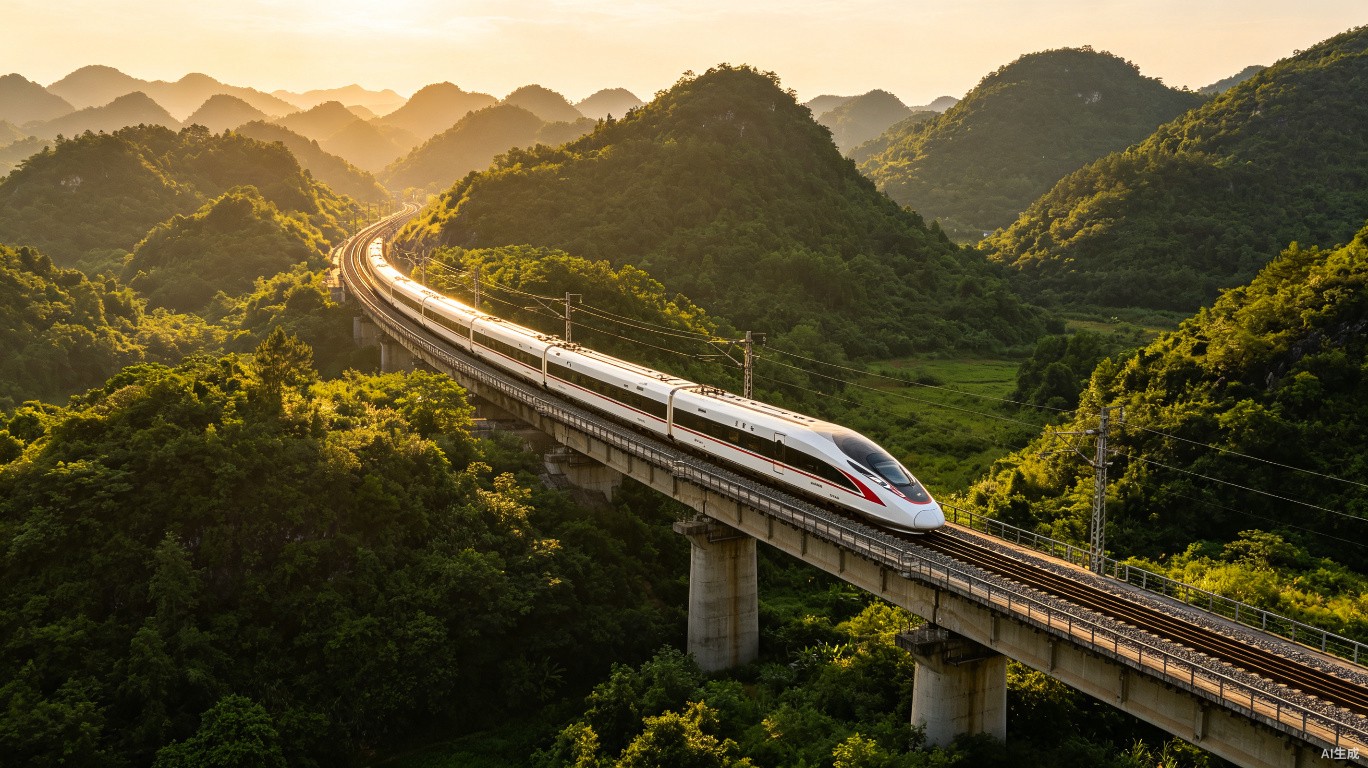
I remember my first attempt to buy a train ticket in China. I stood at the 12306 website, staring at a wall of Chinese characters, completely lost. Ten years later, I book Chengdu-to-Beijing tickets in under 90 seconds while eating breakfast. China’s transportation system is the most impressive in the world once you know how it works – and in this guide, I will show you exactly how.
Why China’s Transportation System Beats What You Are Used To
If you are coming from Europe or North America, China’s transport infrastructure will feel like stepping into the future. A few numbers to set the stage:
- 46,000+ km of high-speed rail – more than the rest of the world combined
- 55 cities with operational metro systems
- Average train delay: under 2 minutes (compare that to Deutsche Bahn)
- A Chengdu-to-Shanghai journey (1,900 km) takes just 7.5 hours by train
The system is safe, cheap, and remarkably efficient. The challenge is not the infrastructure – it is knowing how to navigate it as a foreigner. Let me walk you through every mode of transport you will actually use.
High-Speed Trains: Everything You Need to Know
High-speed rail is the backbone of Chinese domestic travel. If you only read one section of this guide, make it this one.
Train Types Explained
Train numbers in China follow a letter-prefix system. Here is what matters to you:
| Prefix | Type | Max Speed | When to Use |
|---|---|---|---|
| G | Gaotie (High-Speed) | 350 km/h | Major intercity routes – your default choice |
| D | Dongche (Bullet) | 250 km/h | Secondary routes, slightly slower but often cheaper |
| C | Intercity | 200 km/h | Short hops like Guangzhou-Shenzhen (30 min) |
| Z/T/K | Overnight/Express/Slow | 160 km/h or less | Budget travel or scenic overnight routes |
Practical tip: For any route under 6 hours, book a G train. For overnight journeys (e.g., Beijing to Shanghai), a Z-class sleeper can save you a night of hotel costs.
G, D, C – Which One Should You Actually Book?
For 95% of tourists, the answer is simple: book whatever G train fits your schedule best. G trains are the fastest, most frequent, and most comfortable option. D and C trains come into play on shorter or less-traveled routes where G trains do not run.
Second Class vs First Class vs Business Class
I have ridden all three classes dozens of times. Here is my honest assessment:
Second Class (Economy) – perfectly fine for anything under 3 hours. Seats are comfortable, there is air conditioning, power outlets under every other seat, and the price is right. For Chengdu to Chongqing (1h 15m) or Guangzhou to Shenzhen (30m), save your money. Seats are arranged 3+2.
First Class – worth it for routes over 4 hours. The seats are arranged 2+2, so you always get an aisle or window. Legroom is noticeably better, the cabin is quieter, and you get a free bottle of water and sometimes a small snack. Expect to pay about 30-40% more than second class. I upgrade to first class on Beijing to Shanghai (4h 30m) – the extra comfort makes a real difference on a long day of travel.
Business Class – a luxury experience with lie-flat seats, complimentary meals, and dedicated lounges at major stations. I have only done it once (someone else paid), and while it was memorable, I cannot justify the 2-3x price premium for a tourist. Save this for a special occasion.
Real Prices on Popular Routes (2026, Second Class)
| Route | Train | Duration | 2nd Class | 1st Class | Business |
|---|---|---|---|---|---|
| Beijing -> Shanghai | G | 4h 30m | ¥553 (~$76) | ¥933 (~$128) | ¥1,748 (~$240) |
| Beijing -> Xi’an | G | 4h 15m | ¥515 (~$71) | ¥823 (~$113) | ¥1,643 (~$226) |
| Shanghai -> Hong Kong | G | 8h | ¥850 (~$117) | ¥1,360 (~$187) | ¥2,550 (~$350) |
| Chengdu -> Chongqing | G | 1h 15m | ¥154 (~$21) | ¥246 (~$34) | ¥464 (~$64) |
| Guangzhou -> Shenzhen | C | 30m | ¥75 (~$10) | ¥120 (~$17) | ¥225 (~$31) |
| Xi’an -> Chengdu | D | 3h 30m | ¥263 (~$36) | ¥415 (~$57) | ¥788 (~$108) |
Note: Fares fluctuate based on demand and time of day. Book 3-5 days in advance for the best prices. Prices shown are approximate – check current rates on Trip.com or 12306.
How to Buy Tickets: Trip.com vs 12306
There are really only two options worth considering:
Trip.com (recommended for first-timers): Available in English, accepts international credit cards, and has a user-friendly interface. You will pay a small booking fee (usually $3-5), but the convenience is worth it. I used Trip.com exclusively for my first two years in China.
12306 (the official app): Free to use, no booking fees, and shows every available seat in real time. The app supports passport registration and has a passable English interface. The main challenge is payment – you need Alipay or WeChat Pay linked to your account.
My recommendation: Use Trip.com for your first booking to get comfortable with the system. Once you have WeChat Pay set up, switch to the 12306 app – it is faster, cheaper, and more reliable for last-minute bookings.
Station Survival Guide
Chinese train stations are massive, and the first time can be overwhelming. Here is exactly what to do:
- Arrive 45-60 minutes early for major stations (Beijing South, Shanghai Hongqiao, Chengdu East). Security alone can take 15-20 minutes during peak hours.
- Security check: All bags go through an X-ray scanner. You do not need to show your passport here – you will scan it at the boarding gate.
- Find your waiting hall: Large screens display train numbers and corresponding waiting areas. Each train is assigned a specific gate, usually posted 20 minutes before departure.
- Boarding: Gates close 3-5 minutes before departure. Chinese passengers queue aggressively – be ready to move when your gate opens.
- Food in stations: Expect KFC, McDonald’s, and local noodle chains. Prices are 2-3x street prices but still reasonable (¥15-30 for a meal).
- Restrooms: Western-style toilets are available in major stations but not always in smaller ones. Carry your own tissues – toilet paper is not always stocked.
What to Bring on the Train
After years of riding, here is what I always pack:
- Power bank: Not every seat has an outlet, and train Wi-Fi is unreliable for charging
- Snacks and water: The dining car is expensive and limited. Convenience store prices at the station are fine
- Downloaded entertainment: Train Wi-Fi exists but is spotty. Download movies or podcasts before boarding
- Passport: You will need it to board and for ticket checks during the journey
- Tissues and hand sanitizer: Essential for smaller stations and older trains
Common Mistakes I Have Made (So You Do Not Have To)
- Not arriving early enough. I once missed a Chengdu-to-Beijing train because I arrived 20 minutes before departure. Security took 15 minutes, and the gate was already closed. Now I always arrive 45 minutes early.
- Getting on the wrong train. Train numbers matter – G1234 and G1235 may depart from the same platform within minutes of each other. Always double-check the train number on your ticket against the platform display.
- Not downloading the 12306 app. The app sends push notifications about delays, gate changes, and your train status. It is much more reliable than checking the screens.
- Forgetting my passport. No passport, no boarding. This is non-negotiable – I keep mine in a front pocket on travel days.
Subways: The Easiest Way to Explore Cities
Every major Chinese city has a metro system, and they are clean, cheap, and easy to use once you understand the basics.
How to Pay for the Subway
In 2026, you have three options:
- Scan QR code at the gate with Alipay or WeChat Pay – this is the most common method and works in every city
- Transit card: Buy a physical card at the station (¥20 deposit + balance). Works across most cities
- Apple Pay / Huawei Pay: Supported in Beijing, Shanghai, Guangzhou, and Shenzhen
Subway Tips That Save Time
- Avoid rush hour (7:30-9:00 AM, 5:30-7:30 PM) if possible. The crowds are intense – I have seen station staff physically pushing people into cars during peak times
- Use the last car for a slightly less crowded ride
- Stand on the right on escalators – this is strictly observed in most cities
- Download the city’s metro app: Beijing, Shanghai, and Guangzhou all have official English apps with real-time train positions and route planning
Taxis and Didi: Getting Around Without the Subway
Using Didi (China’s Uber)
Didi is the dominant ride-hailing app in China, and it is what most expats use daily. Here is what you need to know:
- Download the Didi app and register with your phone number. The app has an English interface.
- Link your payment method: WeChat Pay or Alipay works best. Some Didi options now accept international cards directly.
- Choose your ride type: “Express” (standard car) is cheapest. “Comfort” is slightly nicer. “Premier” is luxury. For most trips, Express is fine.
- Set your destination in English or Chinese. The app translates automatically for the driver.
Street Taxis: Still Useful in Smaller Cities
In tier-2 and tier-3 cities where Didi coverage is spottier, street taxis are still common. A few rules:
- Always insist on the meter. If the driver refuses, get out and find another taxi
- Show the driver a screenshot of your destination in Chinese. Even if you cannot speak Chinese, a map pin or address screenshot solves most communication problems
- Take a photo of the license plate when you get in. This is your safeguard if anything goes wrong
- Expect to pay ¥10-15 for a short city ride, ¥30-50 for cross-town, and ¥80-150 from airport to city center
Buses: When to Use Them (And When to Skip Them)
City buses in China are extremely cheap (¥1-3) but I rarely recommend them for tourists. They are crowded, stops are announced only in Chinese, and the route maps are hard to decipher. That said, in smaller cities without metro systems, buses may be your only public transport option.
Long-distance buses are a different story. For routes not covered by high-speed rail (e.g., Chengdu to Jiuzhaigou), buses are the standard option. Book through your hotel or a travel app like Fliggy.
Bikes and E-Scooters: The Local Way
Many Chinese cities have shared bike systems (Meituan Bikes, HelloBike) that you can unlock with a phone scan. A single ride costs about ¥1.50 ($0.20). E-scooters are also ubiquitous – you will see them parked outside every subway station.
For tourists, biking is great in cities with flat terrain and dedicated bike lanes (Chengdu, Hangzhou, Shanghai’s riverfront). I would not recommend it in hilly cities like Chongqing or in heavy traffic areas.
Domestic Flights: When the Train Does Not Make Sense
For routes over 1,500 km without direct high-speed rail (e.g., Beijing to Kunming, Shanghai to Lhasa), domestic flights are your best bet. China has several airlines, with China Southern, Air China, and China Eastern being the largest.
Tips for booking domestic flights:
- Use Trip.com for English-language booking
- Book 2-3 weeks in advance for domestic routes
- Budget airlines like Spring Airlines offer cheaper fares but charge for checked bags
- Arrive at the airport 2 hours before domestic flights – security at Chinese airports is thorough
- Most domestic flights do not include meals on flights under 2.5 hours
Quick Reference: Which Transport for Which Trip?
| Distance | Best Option | Budget Option | Time Saved |
|---|---|---|---|
| Within a city | Subway / Didi | Shared bike | Subway is fastest |
| Neighboring cities (< 300 km) | High-speed train | Bus | Train wins by 2-3x |
| Cross-country (< 1,500 km) | High-speed train | Overnight sleeper train | Train vs flight is comparable |
| Cross-country (> 1,500 km) | Domestic flight | High-speed train | Flight saves 4-6 hours |
| Remote areas (no rail) | Bus / Charter car | Long-distance bus | No alternative |
Final Tips Before You Go
After a decade of living in China, here are the principles that matter most:
- Set up WeChat Pay and Alipay before you arrive. You will use them for subway gates, Didi, and train tickets. Our WeChat Pay guide covers the full setup.
- Download offline maps. Google Maps works in China with a VPN, but Baidu Maps has better transit routing. Download your destination city offline in both apps.
- Learn a few transport phrases: “zhan tai” (platform), “che xiang” (carriage), “zuo wei” (seat). Station staff will appreciate the effort.
- Always carry your passport. You need it for train boarding, hotel check-in, and some subway security checks.
- Book popular routes early. Beijing-Shanghai and Chengdu-Chongqing sell out during holidays. During Chinese New Year and National Day (October 1-7), tickets can sell out within minutes of release.
China’s transportation system is genuinely world-class. Once you get past the initial learning curve, you will find it faster, cheaper, and more reliable than almost anything back home. The key is knowing which option to use and how to pay for it – and now you do.